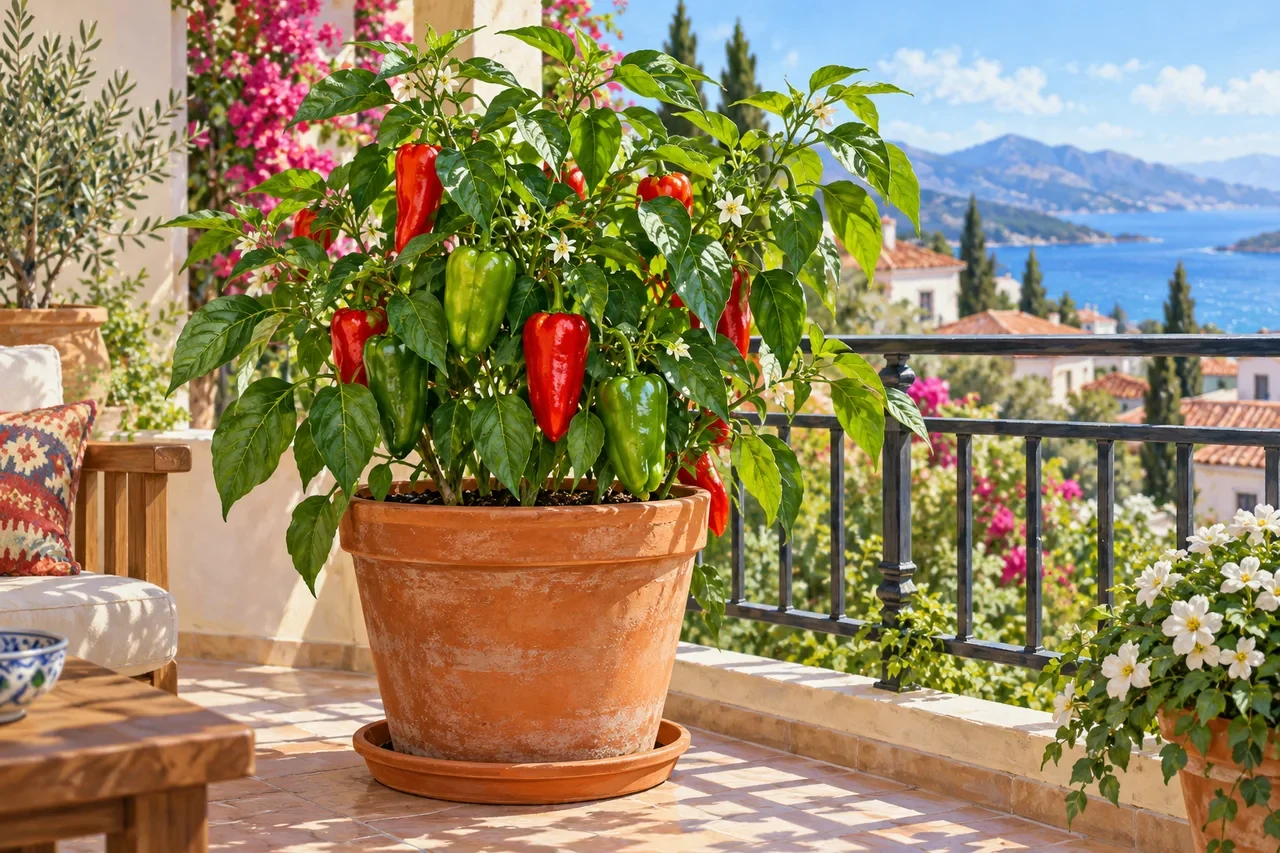
Illustrative editorial image generated with AI.
It is easy to put peppers on the same calendar as tomatoes, but they can be more tender in a cool spring. Taking the seedlings outside early because of a few warm days can leave plants standing still for weeks.
Daytime temperature is not enough
When you plant out, look at night conditions and whether the soil has warmed, not only at the daytime temperature. A stressed seedling planted early can be overtaken by a healthy one planted later.
Fertiliser does not replace light in shade
Peppers want strong light. Extra fertiliser on a shady balcony does not make up for a lack of light. If the plant is stretching and growing weak, measure the hours of sun first.
A small pot dries fast in summer
A small pot dries quickly in summer and the root temperature swings more. A more even volume helps, but leaving a huge pot of heavy mix constantly wet is not the answer either.
Dropped flowers are not a disease by themselves
Flower drop is not a disease on its own. A sudden cool spell, running dry, excessive heat and root stress can all play a part. Remembering that week’s weather and watering helps the diagnosis.
Check under the leaves once a week
Checking under the leaves once a week catches pests such as aphids before the colony grows. Identifying the pest and starting with the lowest-risk suitable response is better than reaching for a broad-spectrum product at the first insect you see.
Acclimatise seedlings gradually
Do not move a protected seedling straight into sustained wind and sun. Introduce outdoor conditions gradually and monitor cold nights. Samsun's coast and higher districts do not necessarily share the same conditions on a given date. Use your own location's forecast and growing space rather than one universal planting day.
Let the container guide watering
Check that drainage holes are open. Rain outside does not prove the pot beneath your balcony roof has been watered. Examine the surface and moisture below it before watering, ensure excess water can escape and avoid leaving the pot standing in water. Learning how the pot's weight changes is more informative than pouring an identical amount every day.
Keep a simple growing record
Note the seedling, planting date, sunlight at its position and first flowering date. When feeding, follow the product's crop and dose instructions rather than increasing the amount because flowers are scarce. Changing several inputs together makes the result hard to interpret. Provide suitable support as developing fruit adds weight to the plant.
Sources
For basic cultivation, see the RHS sweet-pepper guide; for local conditions use the MGM Samsun forecast. This guide does not prescribe one planting date or guaranteed yield for every district.