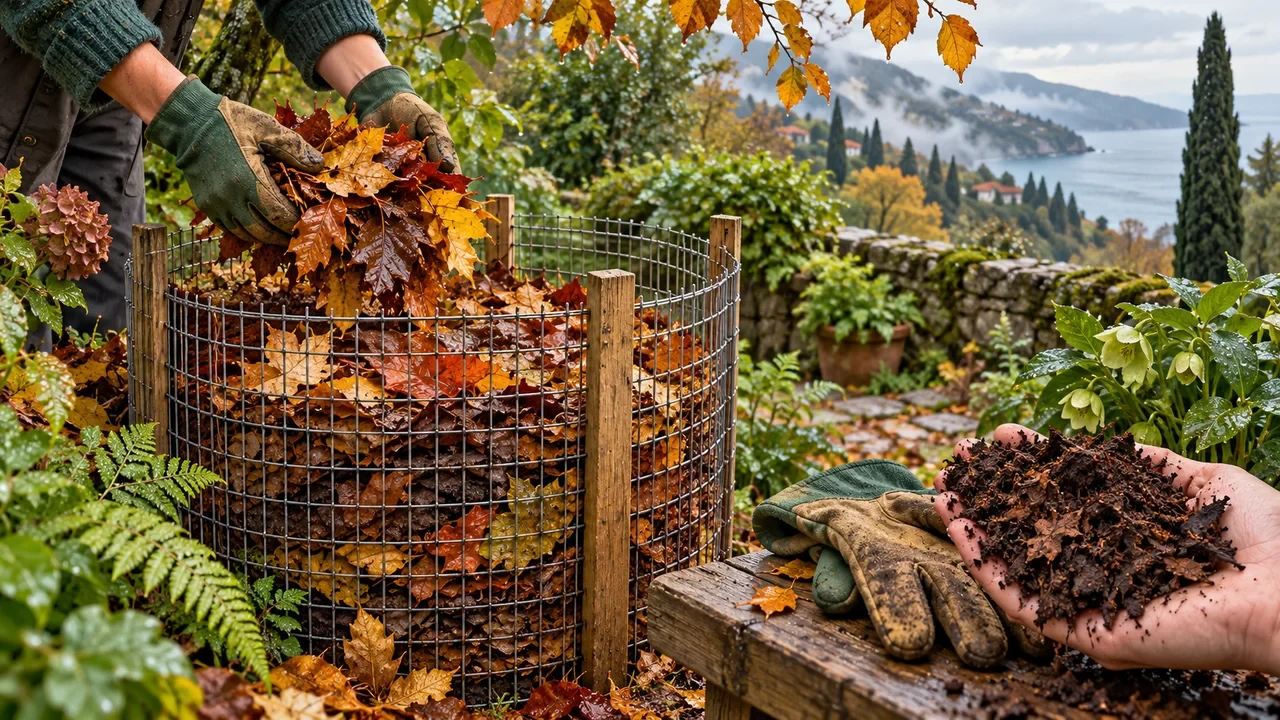
Illustrative editorial image generated with AI.
A bag of autumn leaves can become useful garden material, but it will not turn into ready-to-use potting mix just because it has spent a wet winter outside. Leaf mould is decomposed leaf material used to improve or cover soil. The practical job is to collect suitable leaves, give them air and moisture, and allow enough time.
For a garden or balcony in Samsun, judge the actual storage spot. Leaves under a roof may remain dry while an open container below a downpipe becomes saturated. The city name cannot tell you which condition exists inside your bag.
Decide what you want to make
University of Maryland Extension distinguishes organic amendments from mineral soil and describes leaf mould as a form of slow, or cold, composting. It is an addition to a growing environment, not a complete replacement for soil.
If you want to process vegetable scraps and a range of garden waste, use a composting system suited to those ingredients. Keep this project focused on leaves so you can recognise what went in and judge the result. Our Samsun composting guide covers the broader mixed-material approach.
Collect a small, traceable first batch
Start with leaves from a known part of your own garden or another place where you have permission to collect. Remove litter and separate woody branches. Avoid using a mixed roadside sweep as your first batch: it is harder to know what else it contains. Material from a plant with an identified disease deserves a disease-specific disposal decision, rather than an assumption that a cold pile will disinfect it.
The RHS leafmould guide explains that leaf type affects the process: thick leaves benefit from shredding, while needles can be slow. Label your batch with the collection month and the main leaf types. This simple record makes next autumn's result easier to interpret than an anonymous pile.
Choose a container you can inspect
Use a ventilated leaf enclosure in a sheltered garden corner, or a strong bag with holes for air and drainage. Moisten dry leaves and avoid compressing them into a solid block. These are alternatives described by the RHS; choose the one that fits the available space.
Before filling, decide how you will check the centre and where excess water will go. On a balcony, keep the setup clear of the drain and avoid leaving runoff where people walk. Do not add more bags than you can safely store and move. A manageable first batch is more useful than an inaccessible stack.
Use observations instead of automatic watering
| What you find | What to check next |
|---|---|
| Dry, crisp leaves in the centre | Check whether the container is sheltered from rain; add moisture gradually and reassess. |
| A dense, wet mat | Check blocked drainage and gently separate the leaves so air can enter. |
| A strong unpleasant smell | Look for standing water or unexpected waste; correct the setup rather than masking the smell. |
| Little change after a short period | Check moisture and leaf type, then allow time; slow decomposition is not automatically failure. |
This table is a practical inspection routine, not a laboratory diagnosis. Note the date and what you changed. If you add water, move the bag and mix the material all at once, it becomes harder to learn which adjustment was needed.
Judge the material before choosing its use
North Carolina Cooperative Extension's leaf-mould guide, hosted by LSU AgCenter, describes a mature material with a dark colour, earthy smell and crumbly texture. Use those observations alongside age; a label alone cannot show whether the middle has decomposed.
The RHS describes a process commonly taking around two years, with more fully decomposed material suited to finer uses and younger material useful as mulch. Do not promise a finished seed-sowing medium by spring. For a first batch, trial a modest amount as a surface treatment in a small established bed, then watch how it behaves before extending its use.
Leave unprocessed material to continue breaking down when the intended use requires a finer result. Keep some leaves undisturbed in a suitable garden corner if that fits your garden management. The useful outcome is a repeatable habit: a labelled batch, an accessible container, and a record of moisture and texture when you inspect it.