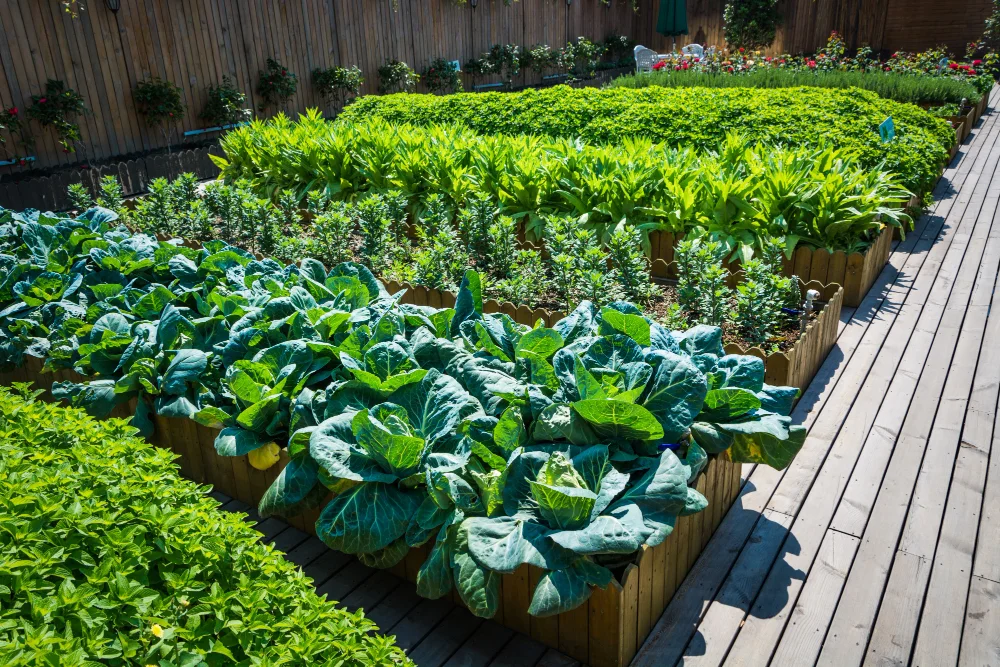
If heavy soil stays mud for days after rain, a raised bed is tempting. Nailing four boards together and filling them with peat alone is not how you build a vegetable bed that lasts.
Raising the bed does not drain a flooded garden
Raising the root zone above the surrounding ground can improve drainage and your control of the soil. If the whole garden sits under water, a raised bed does not solve the main drainage problem by itself.
An impermeable base can trap water
Making the base unnecessarily impermeable can stop water from leaving. Where the ground is suitable, it helps if vegetable roots can reach the soil below. If rodents are a problem, a physical mesh is a separate decision.
Compost alone can collapse and hold water unevenly
Filling the whole bed with compost alone can lead to excessive settling and uneven water holding. A structural mix of mineral soil and suitable organic material lasts longer.
A free-draining bed can dry faster in summer
Because a raised bed drains well, it can dry faster than the surrounding soil in summer. Do not rely on Samsun’s rainy reputation; watch moisture in hot weather.
Set the width by your reach
Choose the width from how far you can reach, not from a standard you found online. Reaching every point without stepping in the middle reduces compaction. At the end of the first season, note which corner stayed wetter and adjust the system in the second year.