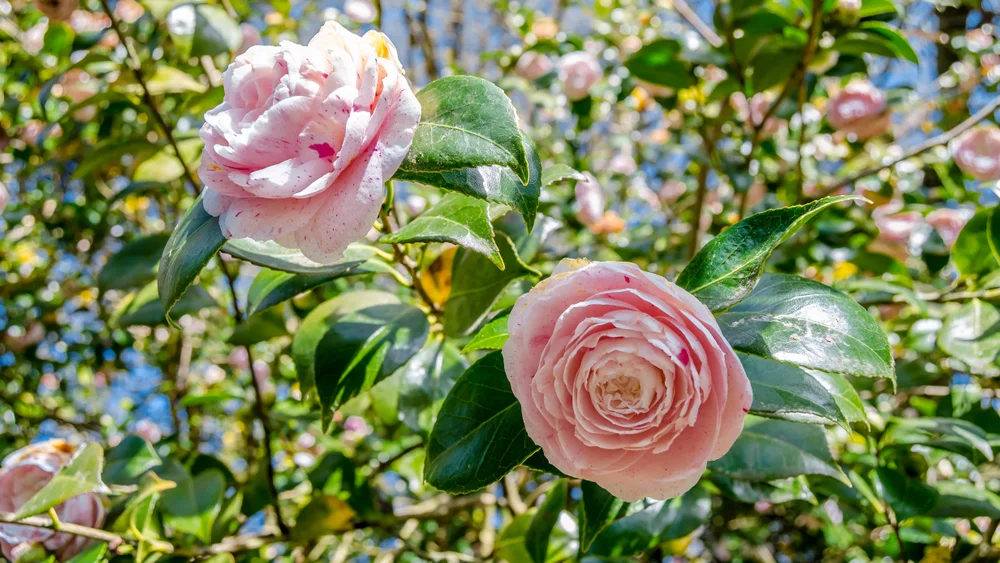
Camellia suits a Black Sea garden, but “likes moisture” does not mean the roots can sit in water. Good camellia care treats position, an acidic root environment and steady moisture together.
Morning sun, afternoon protection
A spot with morning sun, sheltered from harsh afternoon sun and drying wind, can be a good start. Very deep shade can reduce flowering, while a sudden move into strong sun can stress the leaves.
Acid-loving does not mean random iron
Camellia is an acid-loving plant. At a high pH some nutrients become harder to take up, and young leaves can yellow between the veins. In that case it is better to assess pH and the irrigation water than to add iron or fertiliser at random.
Filling only the planting hole with peat can collect water
On heavy ground, filling only the planting hole with peat can sometimes make surrounding water collect in that loose hole. Watching the site during rain tells you more than a theoretical soil recipe.
Bud drop has more than one cause
Bud drop is not tied to a single cause. Constantly moving the pot, irregular watering and sudden temperature changes can increase stress. Keeping conditions as steady as you can while the plant is in bud is a good practice.
Pruning can remove next year’s buds
Pruning without knowing the flowering cycle can cut off the next buds. Keeping the natural form with the corrections needed after flowering asks for less work than forcing a shape every year.